Informative Blogs
 October 22, 2024
The Complete Guide to Digital Marketing for Beginners and Advanced Marketers in Nepal
In today’s digital age, every business, whether small or large, needs a strong online presence to thrive. Digital marketing has completely transformed how companies interact with their customers, build brands, and achieve success. Especially in a developing market like Nepal, where digital adoption is rapidly increasing, businesses must leverage the power of digital marketing to stay relevant and competitive.
Whether you’re just getting started with digital marketing or looking to enhance your existing strategies, this comprehensive guide will break down the essentials of digital marketing from beginner-level fundamentals to advanced strategies that deliver real results.
Introduction to Digital Marketing: What Is It?
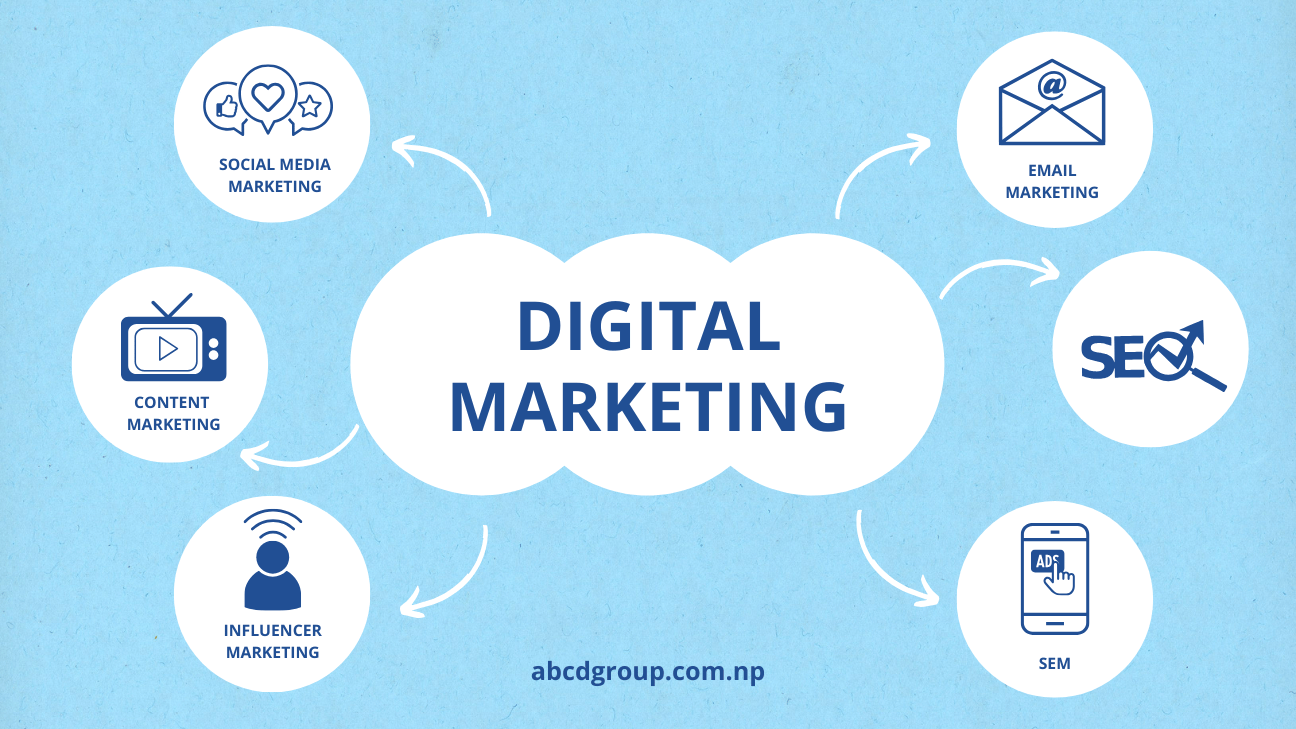
Digital marketing refers to the promotion of products, services, or brands through electronic media, primarily the Internet. It encompasses a wide range of online activities, including:
- Search Engine Optimization (SEO)
- Search Engine Marketing (SEM)
- Content Marketing
- Social Media Marketing (SMM)
- Email Marketing
With the digital landscape in constant evolution, mastering these areas is essential for businesses to succeed in the online marketplace.
The Evolution of Digital Marketing: Globally and in Nepal
Globally, digital marketing has undergone significant changes with the rise of major platforms like Google, Facebook, and YouTube, alongside the expansion of mobile apps and social media.
In Nepal, the digital marketing landscape is relatively new but rapidly growing. The surge in internet penetration, increased smartphone use, and widespread social media engagement have created immense opportunities for businesses to tap into Nepal’s tech-savvy audience. Many local businesses are now recognizing the importance of maintaining a strong online presence to reach consumers more effectively.
Digital Marketing vs. Traditional Marketing
The key differences between digital marketing and traditional marketing lie in the mediums, cost, measurability, targeting, and engagement levels. Below is a breakdown of these critical differences:
Mediums
- Traditional Marketing: Utilizes offline platforms such as TV, radio, print ads (newspapers, magazines), and billboards.
- Digital Marketing: Leverages online platforms, including websites, social media, email, and search engines.
Cost-Effectiveness
- Traditional Marketing: Usually expensive, especially when purchasing airtime on TV or full-page newspaper ads.
- Digital Marketing: More affordable, with flexible budget options. Even small businesses can run effective campaigns with minimal spending.
Measurability
- Traditional Marketing: Difficult to measure exact reach and ROI (Return on Investment). Often requires surveys or guesswork.
- Digital Marketing: Offers detailed analytics and real-time tracking, allowing businesses to monitor performance, engagement, and ROI at any time.
Targeting
- Traditional Marketing: Broad audience reach but lacks precision in targeting.
- Digital Marketing: Highly targeted, allowing businesses to reach specific demographics based on age, location, behavior, and interests.
Engagement
- Traditional Marketing: One-way communication, often passive consumption of media.
- Digital Marketing: Two-way communication with real-time interaction through social media, email, and other platforms. Encourages engagement, feedback, and direct conversations with the audience.
Flexibility and Scalability
- Traditional Marketing: Less flexible—once ads are live, they can’t be easily changed.
- Digital Marketing: Offers scalability and flexibility, allowing for real-time adjustments to campaigns based on performance.
For businesses in Nepal, embracing digital marketing is crucial to maximizing ROI while maintaining the flexibility to adapt to changing customer preferences.
Key Components of Digital Marketing
1. Search Engine Optimization (SEO)
What is SEO and How Does it Work?
SEO refers to optimizing a website to rank higher on search engine results pages (SERPs) like Google, increasing its visibility to potential customers. SEO strategies include:
- On-Page SEO: Optimizing web page content, titles, meta descriptions, and headers.
- Off-Page SEO: Building backlinks from authoritative websites.
- Technical SEO: Ensuring site speed, mobile optimization, and a clear URL structure.
Why SEO is Important for Nepalese Businesses
SEO is vital in Nepal, where more people turn to Google to find solutions, products, and services. Ranking higher on search engines helps local businesses attract more customers, build authority, and gain organic traffic over time.
2. Search Engine Marketing (SEM)
What is SEM?
SEM involves paid advertising, often through Google Ads, to place a website at the top of search results quickly. This differs from SEO, which focuses on organic rankings.
SEM Strategies:
- Pay-Per-Click (PPC): When users search for relevant terms, businesses bid on keywords to display ads.
- Display Ads & Remarketing: Increase brand awareness through image-based ads and retargeting customers who have previously interacted with your website.
3. Social Media Marketing (SMM)
Why Social Media is Crucial in Nepal
Platforms like Facebook and Instagram dominate Nepal’s digital space, with over 15 million Facebook users and 3.8 million Instagram users, mostly aged between 18 to 34. Social media marketing allows businesses to target and engage this massive audience.
Key Tactics for SMM:
- Organic Marketing: Engaging your audience with posts, stories, and organic interaction.
- Paid Marketing: Using Facebook or Instagram ads to reach larger, more targeted audiences.
Trending on Social Media:
- Short-form video content (e.g., Reels, Shorts, TikTok)
- Influencer partnerships
4. Content Marketing
The Importance of Content Marketing
Content marketing focuses on creating valuable and relevant content that resonates with the audience. Content types include blog posts, videos, infographics, and podcasts.
Storytelling in Content Marketing:
Storytelling connects your brand with customers on an emotional level, which builds trust and brand loyalty. For example, a local tea company in Nepal sharing the story of how their tea is cultivated can captivate an audience.
Types of Content:
- Blogs: Answer customer queries and provide insights.
- Videos: Showcase products or offer behind-the-scenes looks at your business.
- Infographics: Simplify complex data for your audience.
5. Email Marketing
Basics of Email Marketing
Email marketing involves sending tailored emails to nurture leads, build relationships, and promote services. This method remains one of the most cost-effective marketing strategies, offering a high return on investment (ROI).
Segmentation and Personalization:
Sending personalized content based on customer behavior or interests can significantly improve engagement and conversion rates.
6. Affiliate Marketing
What is Affiliate Marketing?
This involves partnering with affiliates (individuals or companies) who promote your products for a commission.
Benefits of Affiliate Marketing:
- Expand your reach without upfront advertising costs.
- Pay only when affiliates generate sales or leads.
7. Influencer Marketing
How Does Influencer Marketing Work?
Influencer marketing leverages the popularity of online personalities to promote your products.
Micro-Influencers vs. Macro-Influencers:
- Micro-influencers: Niche audiences with higher engagement.
- Macro-influencers: Larger audiences with broad reach.
Advanced Digital Marketing Strategies
- Artificial Intelligence (AI): AI helps businesses automate tasks, personalize customer experiences, and optimize marketing processes.
- Personalization: Delivering tailored experiences is becoming non-negotiable for brands that want to keep customers engaged.
- Conversion Rate Optimization (CRO): Optimize your website to convert more visitors into customers by improving user experience (UX) and refining landing pages.
- Data-Driven Marketing: Use data to drive marketing strategies and measure success more accurately.
The Future of Digital Marketing in Nepal
- Emerging Technologies: AI, Augmented Reality (AR), and Virtual Reality (VR) will shape the future of digital marketing in Nepal, enabling businesses to offer more immersive experiences.
- Mobile-First Strategies: As smartphone usage grows, businesses must prioritize mobile-optimized websites and mobile-friendly content.
Facts and Stats:
- Nepal had over 15.7 million Facebook users in 2024.
- SEO offers a 14.6% conversion rate, much higher than traditional outbound methods.
- Email marketing boasts an ROI of $42 for every $1 spent.
Conclusion:
In Nepal, digital marketing is no longer optional—it’s essential. Businesses must adopt a well-rounded digital marketing strategy, whether through SEO, SEM, social media, or email marketing, to stay competitive. At ABCD Group, we help businesses navigate the complexities of digital marketing and deliver real results that accelerate growth and create brand desire.
Related Blogs

Informative Blogs
March 27, 2025
How to Increase Engagement on Instagram & Facebook in 2025
Social media engagement isn’t just about likes and comments anymore—it’s about building real connections with your audience. As Instagram and Facebook continue to evolve, brands and creators need to stay ahead of the game to maximize engagement and grow their communities.So, how do you boost your en...

Informative Blogs
March 03, 2025
Event Management in Nepal: Organize Successful Product Launches & Corporate Events
Event management is a crucial aspect of brand building and business growth. Whether launching a new product or hosting a corporate event, a well-executed event can generate buzz, enhance brand credibility, and foster strong business relationships. In Nepal, the event management industry has grow...

Informative Blogs
January 05, 2025
The Role of Video Production in Storytelling: Why Brands Can’t Ignore It in 2025
In today’s fast-paced digital era, video has become the most powerful medium for storytelling. By 2025, this trend is set to dominate the content landscape, making video production an essential tool for brands to connect, engage, and convert their audience.Whether it’s a cinematic brand film, a prod...
Informative Blogs
January 03, 2025
The Future of AI in 2025: Transforming Industries and Daily Life
Artificial Intelligence (AI) is no longer a futuristic concept—it’s a cornerstone of technological innovation. As we approach 2025, AI is set to revolutionize industries, enhance productivity, and redefine how we interact with technology. Here's an in-depth look at what AI in 2025 will look like and...
Contact Us
Ignite your brand’s potential. Connect with ABCD Group and let’s create desire together.
Office Visit
Phone Number
+9779851341262

Email Address
info@abcdgroup.com.np

Location
Kupondole, Lalitpur




© 2025 ABCD GROUP. All rights reserved.